

That’s the classified ad my dad saw in the Chicago Sun-Times in October 1976. My dad had Oldsmobiles as company cars, so we decided to go look at this “Cutlass.” With three teenagers in high school, we needed another car in the family, so down to the west side of Chicago we went. When the man opened the door to this old, beat-up body shop, it was not just a Cutlass—it was a 442! Stripes, hood scoops, dual exhaust, 8-track. My dad just stared and said, “Oh no…”
I thought there was no way my dad was going to let me get this car—I was barely 16. But we took the all-stock 442 for a drive, and I convinced my dad to go back to the suburb of Park Ridge and get all the money out of my savings. We went back that day in his Vista Cruiser and bought the car for $1,200.
I think it was the summer of ’78 when a friend dragged me up to Great Lakes Dragway in Wisconsin, where on a Wednesday night, for $15, you could trophy race. Win three rounds and you got a big trophy. After that, I was hooked. In the ’80s, I kept wanting to go faster, turning the car into an all-out race car.
I didn’t have the GPA or the money for college, so I eventually ended up on an aircraft carrier for the United States Navy. Much to the displeasure of my stepmother, the car sat in the garage. Once out of the Navy, I studied law enforcement and did a lot of cruising, and eventually got some help from some real speed experts in the suburban Chicago area.
Eric Van Berkum, Chuck Samuel, Top Fuel racer John Sinibaldi, and fellow bracket racer Dave Barker of Barker Automotive were all instrumental in helping me put together a great bracket car. Rick’s Racecraft tubbed the car and added a roll cage. It ran 10.60s at 125 mph.
I was a Roselle, Illinois police officer in the late ’90s when I learned of the National Beat the Heat Racers Organization. It was made up of police officers and firefighters who developed educational programs using race cars to help kids make good decisions about illegal drug use, drinking, gang activity, and to take street racing to the dragstrip. We would take our cars to schools and put on demonstrations, showing kids what it takes to drive a race car.
In Beat the Heat competition, I won the national Modified Cop championship in 1998 and 2000. I also won races in Beech Bend, Kentucky; Gainesville, Florida; and Memphis, and made it to the final four in Tulsa, Oklahoma, where I crashed the car into the wall when the left front tire blew at the finish line.
By that time, I had moved up to a Super Comp dragster and was racing with the Midwest Super Comp Drag Racing Series. I won the season-long series in 2011, which was definitely the highlight of my entire life. The awards banquet was an absolute thrill—everyone in that series was fantastic.
Around this time, I decided to fix the car and remove all the stickers and numbers. I found both front fenders, an original Olds Ram Air hood, grilles, bumper, headlights—eventually everything I needed. My friends at Friendly Ford–Roselle Body Shop repainted the car, and I reassembled everything at Jim Gurke’s Reliable Automotive: headlights, stereo, heater, defroster, lights, wipers—everything to make it legal.
Mike Chlopek of Motive Motion Race Cars in Itasca, Illinois did an incredible job building a custom dual exhaust system. I spent a lot of money, did a lot of work, and had a lot of help from great people, but now…
I’m back to cruisin’, jamming my ’70s tunes, turning the key and going for a ride—just like I did in high school.
I have to give much thanks and gratitude to Nancy Perry for putting on the best car shows in the Southwest, and to Rod Loveless for putting pictures of our cars in the Roddin’ Arizona newspaper. Us gearheads have put a lot of money, heart, and soul into our hot rods. It’s a huge community, so when you see a picture of your car in print, it makes it all worthwhile.
And thank goodness for the Roddin’ Arizona newspaper—everything you need to know is in this paper.
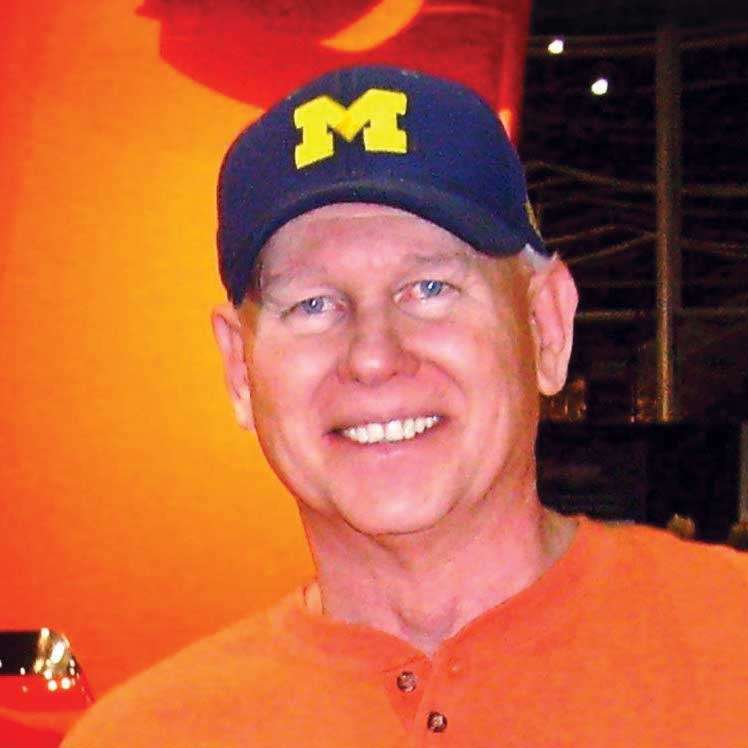
Scott Phillips


Photos by
Rod Loveless